

By Moerdyk | 18 May 2026


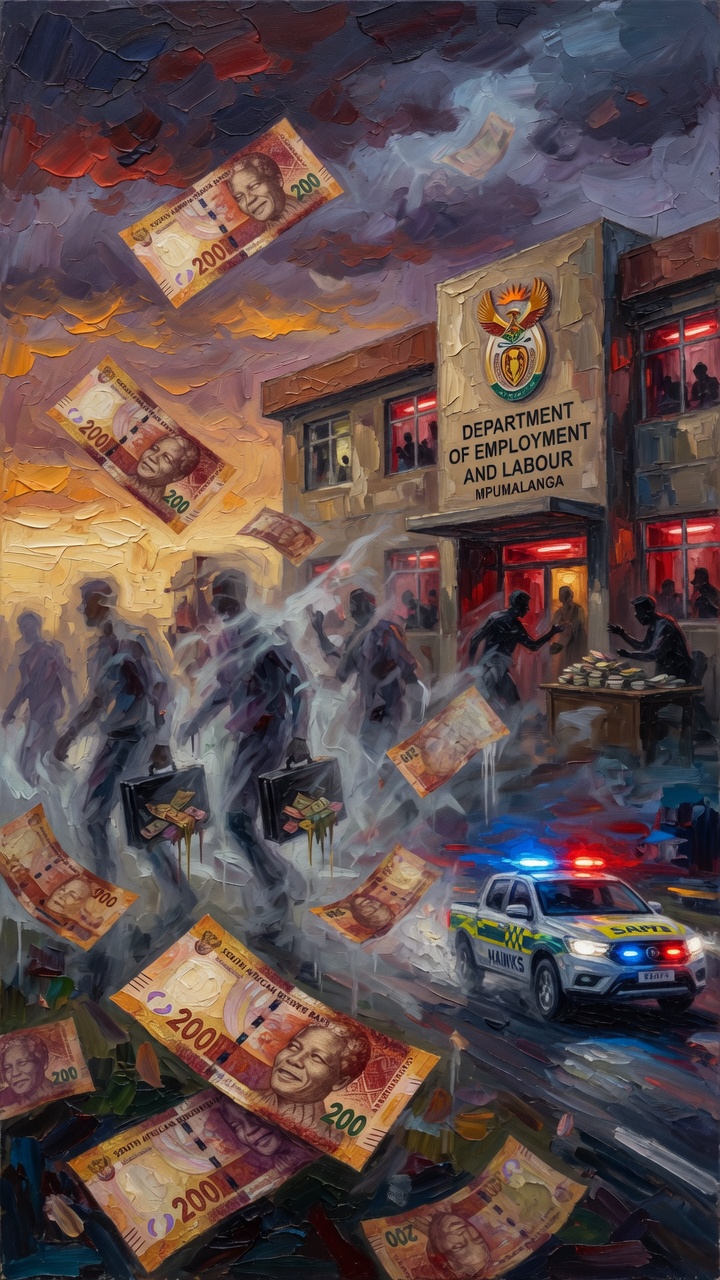
South Africa’s taxpayers just got robbed — again.While millions of honest citizens struggle to make ends meet, the Hawks have arrested three suspects for allegedly siphoning off R27 million from the Unemployment Insurance Fund (UIF) by paying salaries to 700 people who don’t exist.


The accused — a 48-year-old Malawian-born construction boss (a permanent SA resident), his wife, and his brother-in-law — are said to have masterminded a slick ghost worker operation using the COVID-19 Temporary Employer/Employee Relief Scheme (TERS). Fake identities. Fake claims. Real money flowing straight into crooked pockets.This is textbook South African corruption: invisible employees, very visible cash disappearing into the night.A Haunting National ProblemThis isn’t an isolated blunder.
Ghost workers have become a permanent feature of South Africa’s broken public service:PRASA — The Passenger Rail Agency was haunted by up to 3,000 ghost employees. When the payroll was finally cleaned, over 1,100 “workers” vanished overnight, saving the entity nearly R200 million in phantom salaries.Mpumalanga Education — Just months ago, the Hawks busted a R100 million fraud ring involving 27 suspects and inflated contracts feeding ghost payments.Nationally, experts estimate the public sector bleeds R3.9 billion every year to ghost workers and payroll fraud.From railways to hospitals, from education to social grants — the same story repeats: weak systems, insider collusion, and mountains of taxpayer money evaporating into thin air.


The Department of Employment and Labour says it welcomes the arrests. But welcome words mean nothing without real consequences and iron-clad controls.Until the rot is cut out at its roots, South Africa’s ghost workers will keep rising from the dead — and ordinary citizens will keep paying their salaries.