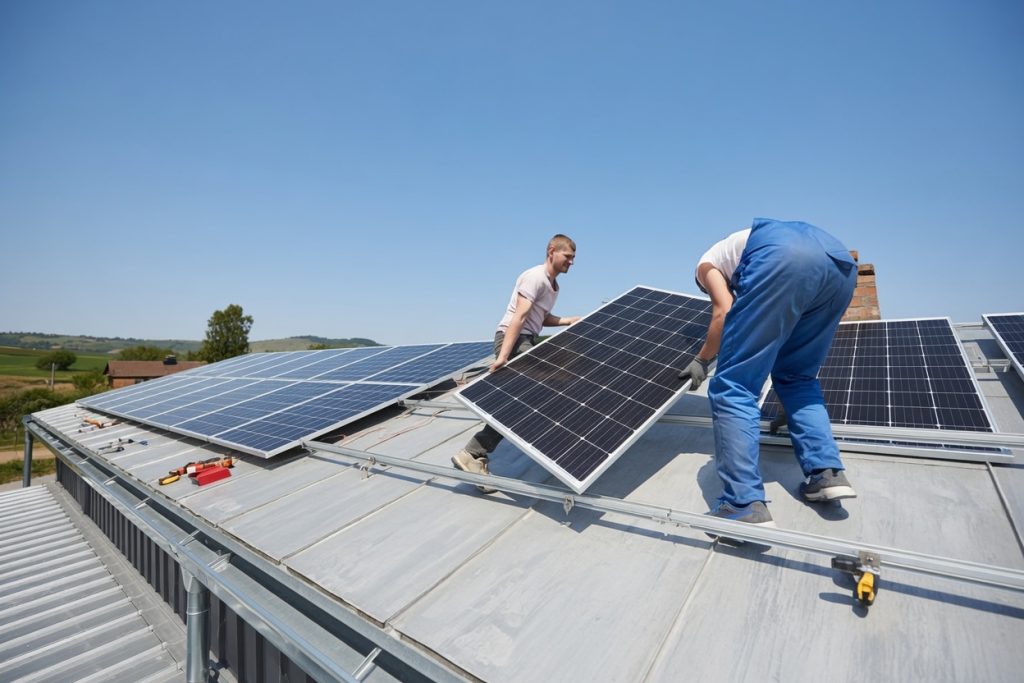
In the small Free State town of Frankfort, a family finally decided they had had enough. Years of load shedding had spoiled food, disrupted schoolwork, and left them feeling powerless. They saved, borrowed, and installed a modest solar system with battery backup on their roof. At the time, in 2020, the system cost them around R100,000. They calculated that, with the electricity prices of that period, the panels would pay for themselves in roughly eight to nine years through lower monthly bills.
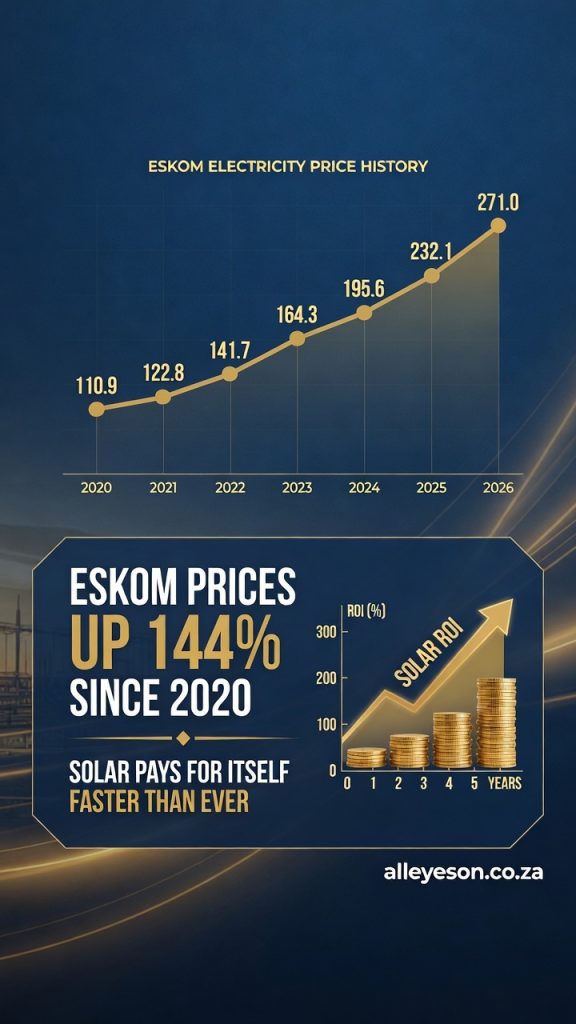
What they could not have foreseen was how dramatically the cost of grid electricity would rise in the years that followed. In 2020, the average household price stood at about 111 cents per kilowatt-hour. By 2026 it had climbed to 271 cents per kilowatt-hour, a cumulative increase of 144%. The price more than doubled in just six years.

This sharp rise should, in theory, have made their solar investment even more valuable. With grid power becoming so much more expensive, the same R100,000 system installed today would generate significantly higher monthly savings than it would have in 2020. Many households in similar situations are now seeing their solar systems pay for themselves in five to six years instead of eight or nine, simply because every unit they avoid buying from Eskom costs far more than before.
Yet the reality on the ground in Frankfort and other Eskom Direct towns has been more complicated. In 2025 Eskom introduced its new Retail Tariff Plan, which shifted a much larger portion of costs into fixed monthly charges, network capacity fees, service charges, and generation capacity charges. These fixed fees increased by 88% in the first phase alone. For households that still draw some power from the grid at night or during cloudy periods, a large part of their potential savings is now swallowed by charges they cannot avoid.

The family in Frankfort feels this tension keenly. Their solar system still delivers power when the grid fails and has reduced their overall reliance on Eskom. But the monthly bill has not fallen as much as they expected when they made the decision to invest. The very tariff changes that were meant to create a fairer system have, for many solar users, reduced the financial benefit of the panels they installed in good faith.
Across South Africa the story is repeating itself. Grid electricity has become dramatically more expensive in a short space of time, which should accelerate the payback on solar investments. At the same time, the structure of the new tariffs is making it harder for ordinary households , especially those in smaller towns on Eskom Direct supply, to capture the full value of the power they generate themselves.
For the family in Frankfort, the panels on their roof still represent a step toward greater energy security. But the maths they did in 2020 no longer holds in 2026. The price of staying on the grid rose faster than almost anyone predicted, yet the savings from going solar have been tempered by fixed charges that treat partial grid users harshly. It is a contradiction that leaves many households wondering whether the system is truly designed to reward those who take responsibility for their own power.