For a brief moment, South African drivers allowed themselves to breathe. After months of punishing petrol and diesel prices, the July 2026 adjustments brought genuine relief, cuts of nearly R2 per litre for petrol and more than R3 for diesel. Many motorists filled up with a sense that the worst might finally be easing. That sense of hope is now fading fast.
What looked like a sustained downward trend just weeks ago has shifted dramatically. Latest data from the Central Energy Fund shows that the expected price cuts for August have largely evaporated. Petrol is now projected to fall by less than R1 per litre, while diesel has swung from a substantial decrease to either no change or a small increase, depending on the grade. The numbers have moved so quickly that what was once described as meaningful relief is now being called a disappointment.

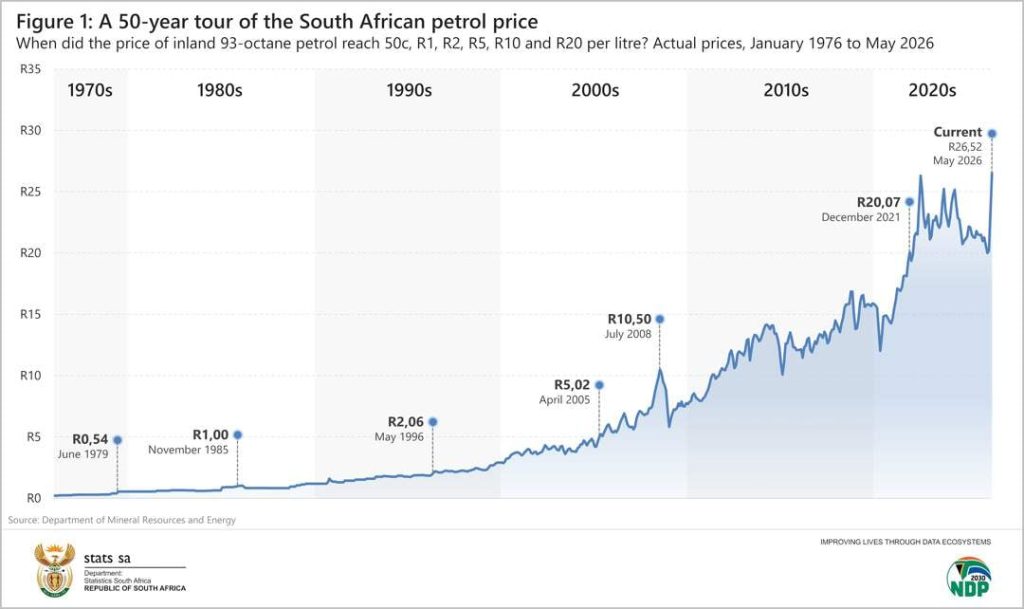
The main driver is the sharp rise in international oil prices. Brent crude, which had dipped towards the low $70s at the end of June, has climbed back above $89 per barrel in recent days. The surge is directly linked to renewed hostilities in the Middle East, including tensions involving Iran and the critical Strait of Hormuz, a narrow waterway through which a large share of the world’s oil supply passes. Any threat to that route quickly feeds into higher fuel prices across the globe, and South Africa, as a major importer of both crude and refined products, feels the impact almost immediately.
The rand’s performance against the dollar has also played a role. Even modest weakening of the currency, combined with higher international product prices, has wiped out much of the over-recovery that was building earlier in the month. By mid-July, the size of the expected petrol cut had already shrunk by around 75% compared with the start of the review period. Diesel’s earlier large over-recovery has largely disappeared.
For ordinary South Africans, the implications go far beyond the petrol station. Higher diesel prices push up the cost of transporting goods, which eventually filters through to food, building materials and everyday essentials. Taxi operators, long-distance truck drivers, farmers and small businesses that rely on bakkies all feel the pressure quickly. What begins as a few extra cents at the pump can become another quiet squeeze on household budgets already stretched thin.
This is not the first time South African motorists have watched a promising price outlook unravel. Fuel prices in the country remain highly sensitive to events far beyond our borders, and the combination of geopolitical risk and currency movements continues to create sharp swings from one month to the next. The July cuts offered temporary breathing space, but the speed with which that space has closed serves as a reminder of how fragile relief can be.

For families watching their monthly transport costs, the message is becoming familiar: short-term gains at the pumps are welcome, but lasting relief remains elusive. Until the global oil market finds more stability, South African drivers will continue to live with the uncertainty that comes with every new monthly announcement.
There is still more than a week left in the current pricing review period, so the final August numbers could still shift. A sudden de-escalation in the Middle East or a stronger rand could restore some of the earlier expected savings. At this stage, however, the trend is clearly moving against motorists. What began as good news has turned into another cautionary chapter in the long story of South Africa’s fuel prices.


