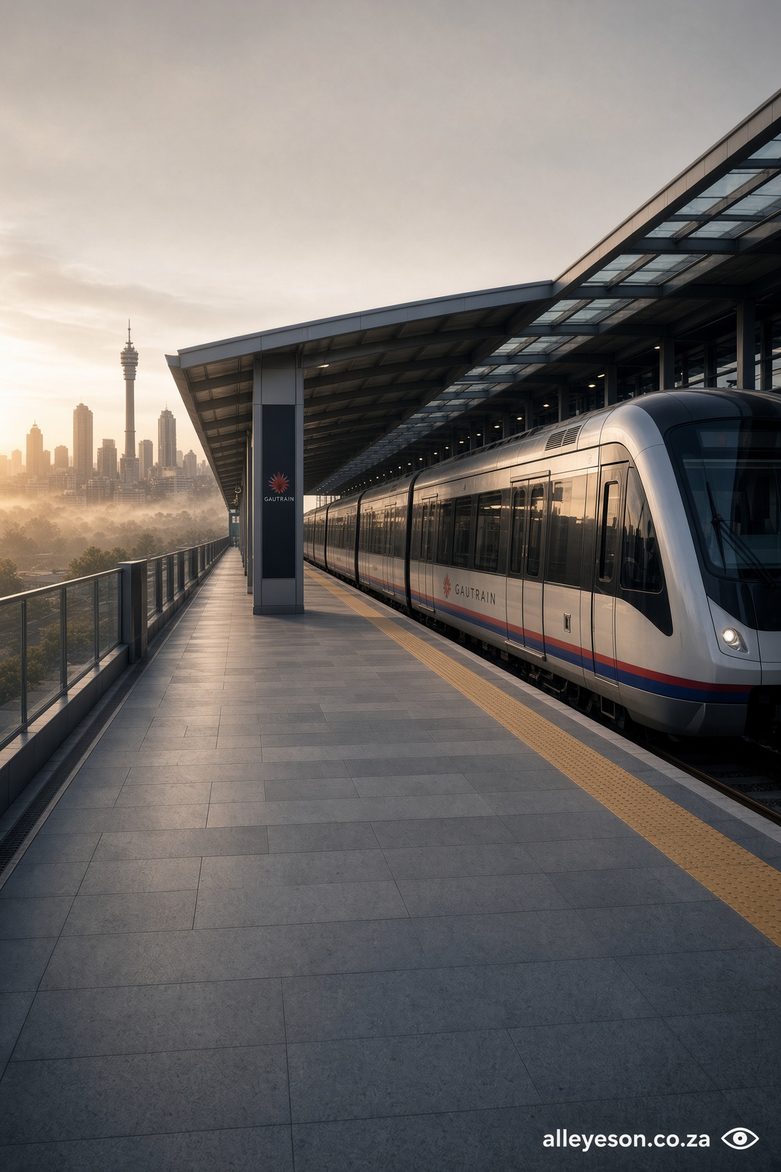
A train that carries a city can still leave a supplier waiting at the station. Fempower Personnel has taken the Gautrain Management Agency to the Johannesburg High Court over an alleged R53.9-million debt, plus interest at 11.75% a year. Finance minister Enoch Godongwana is on the papers. So are transport minister Barbara Creecy, National Treasury, the Gauteng roads and transport department and MEC Kedibone Diale-Tlabela. The case was filed on 26 August. It is a payment fight that now sits in the same room as the people who write the rules for how the state pays its bills.
The number in the court file is R53.9 million, not the R539 million that slipped into a web address. The papers, as reported, do not yet break that sum down invoice by invoice. That gap matters. A court will want to know which contracts, which months and which services make up the claim before it turns an alleged debt into an order. Fempower wants payment within 30 days of such an order. It points to the Public Finance Management Act and Treasury Regulation 8.2.3 — the 30-day rule meant to stop departments and public entities from starving suppliers while files move from desk to desk.
The dispute did not begin in court. Emails attached to the application show the argument was already live in mid-2025. On 28 July that year Gautrain official Lerato Mokoena wrote that an internal variation request was still under way and that delays inside the agency had slowed the process. She asked for another week. On 4 August she asked again for a payment update on invoices and a statement. Those lines do not settle who is right. They show the file had a history before the ministers were named.
Naming Godongwana and Creecy raises the temperature. A staffing firm versus a rail agency is a commercial quarrel. Bring in the finance minister and Treasury and the case starts to look like a test of how public money is supposed to leave the building. Fempower also wants room to come back and ask for more if Gautrain does not pay — including relief that could, in theory, put the agency under administration under section 100 of the Constitution. That is a heavy tool. It is a threat on paper, not a finding. The court has not ruled.


Gautrain still has to answer. Respondents who intend to oppose must say so within ten days of service and file an answering affidavit within 15 days after that. Until those papers land, the public does not have Gautrain’s version: whether it disputes the R53.9 million, whether some invoices were paid, whether a variation never closed, or whether the amount is simply not due. Hunts Incorporated Attorneys act for Fempower. The founding affidavit is from Joslin Simmons.
For riders the train still runs. For a supplier, cash that sits in a dispute is cash that cannot meet a payroll. That is why the 30-day rule exists, and why so many small and mid-sized firms end up in this exact corridor — waiting on a public entity that says the process is not finished. The fair reading today is narrow. A company says it is owed R53.9 million. Senior office-bearers have been cited. The invoices that make up the sum have not been laid out in the reporting so far. The next honest chapter is the answering affidavit, not a verdict written in a headline.