On Friday afternoon, retired Constitutional Court Justice Mbuyiseli Madlanga stood before the University of Cape Town’s law faculty and said what the last three decades have already shown: thirty years into democracy, the Bill of Rights remains, for too many people, a document rather than a life.
The occasion was the annual Rabinowitz Lecture, the centrepiece of the faculty’s Rabinowitz Visitorship, endowed by the late Cape Town entrepreneur and philanthropist Benjamin “Bennie” Rabinowitz, who died in 2023. The series is framed around law, democracy, equality and social justice. Madlanga — currently chairing the Madlanga Commission of Inquiry into alleged criminality, political interference and corruption in the criminal justice system — did not dress the record up.

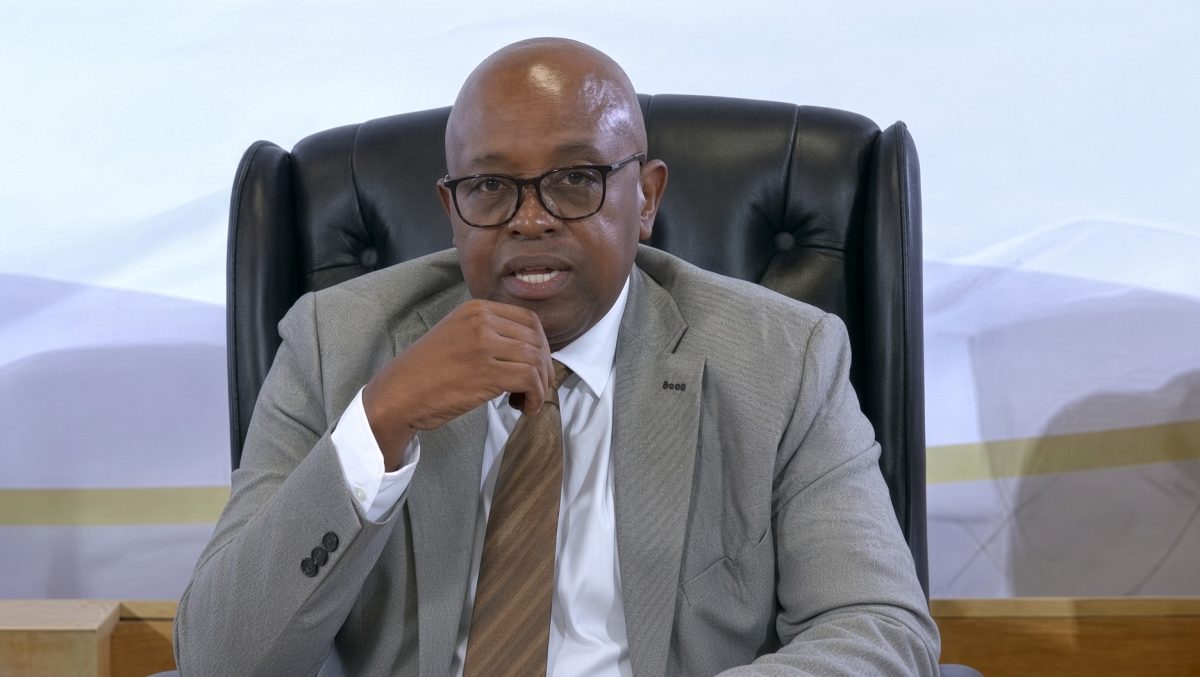
His point was not that the Constitution itself collapsed. It was blunter. “The lesson to draw from this is not that the Bill of Rights has failed or that its promises were overly ambitious or unrealistic,” he said. “Rather, the take-home is the sobering truth that rights do not self-execute.” A legal text, however progressive, cannot build classrooms, reverse inequality, restore human dignity, or make access to justice real. Those things require government to implement what it has already written into law. That is the part that has lagged.
He listed the rights that still do not arrive. For some, access to adequate housing remains illusory; for others, tenuous at best. Education, dignity, justice — promised on paper, delivered unevenly, and in too many places not delivered at all. High unemployment and gender-based violence, he said, are not side notes. They are evidence that the rights of a large part of the country remain unfulfilled. Women who suffer violence at the hands of men are still denied real access to justice. The poor cannot afford lawyers, and so they lose before the argument starts. Equality before the law, in that setting, is a phrase.
The figures he used leave little room for comfort. More than half of litigating South Africans had to represent themselves in court during 2025, without legal knowledge or familiarity with process. Those who can hire someone often get only what they can pay for. Inequality has become a barrier at the courthouse door. That is not an accident of weather. It is what happens when the state that holds the Constitution does not close the distance between the clause and the queue.
Madlanga refused the cheap conclusion that the text should be discarded. He also refused the other cheap conclusion: that reciting the text is the same as honouring it. Rights that do not self-execute depend on budgets that reach the right place, courts people can actually use, houses that get built, and classrooms that function. The government of the day owns that work. Thirty years on, the unfinished part is still unfinished.
He spoke from a particular seat. As chair of the Madlanga Commission he is examining the institutions meant to protect citizens — police, prosecutors, the machinery of criminal justice — after allegations of criminality, political interference and corruption. The Commission was established in July last year following claims by KwaZulu-Natal police commissioner Lieutenant General Nhlanhla Mkhwanazi. The same state that wrote the Bill of Rights is the state now being asked, under oath, how far those institutions have drifted. The lecture and the commission are not separate stories. They describe the same gap from two rooms.
The Constitution is not a failed document. It is a document the current government has not finished paying for in practice. The promise is still on the page. It has been on the page for thirty years. What Madlanga left in the Kramer Building on Friday is the cost of leaving it there.


