

By Moerdyk | 18 May 2026
Picture this: thick, ghostly fog rolling in from the cold Atlantic, swallowing the West Coast in a silent white blanket. For centuries it has brought nothing but damp misery to fishermen and farmers. But what if that same fog — the very thing that hides the horizon could be turned into clean drinking water for the parched communities of Saldanha, Vredenburg, and beyond?
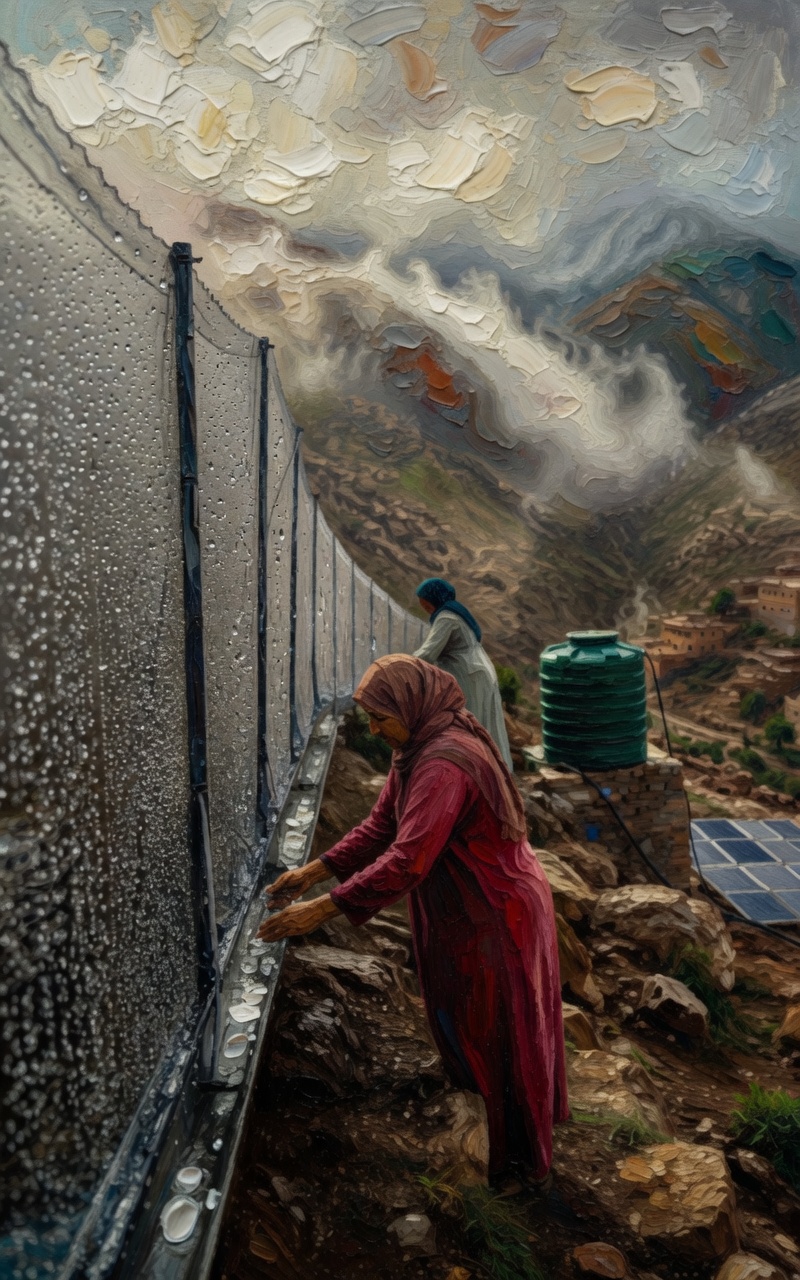
In Morocco’s Atlas Mountains, women once walked four hours a day carrying heavy water barrels on their heads. Today, giant fog nets on the slopes turn mist into litres of water, freeing entire villages. The same silent revolution could and should happen right here on South Africa’s West Coast.


The West Coast’s Hidden Water GiftThe cold Benguela Current collides with warm air to create some of the most reliable advection fog in the world. Research by Professor J. Olivier and the Water Research Commission has already proven it works:At Cape Columbine (just north of Saldanha), pilot collectors regularly harvested over 2.5 litres per square metre per day with peaks far higher. Almost 90% of that water came from fog alone.At Lepelfontein (near Vredendal), a 70 m² net system delivered an average of 4.6 litres per m² daily, with single-day hauls exceeding 3,800 litres.Other tested sites include Lamberts Bay and hills around the West Coast below the 200-metre contour line exactly where Saldanha Bay’s coastal ridges sit.Prime Locations Near Saldanha.
This technology is tailor-made for the area:Cape Columbine & surrounds Highest recorded yields on the entire West Coast.Hills above Paternoster and Jacobs Bay Perfect elevation and direct exposure to sea fog.Coastal ridges between Saldanha and Langebaan Easy access, strong prevailing winds, and proximity to communities that need water most.Vredenburg and inland mission stations Similar to the successful Lepelfontein project.These aren’t wild dreams they’re proven, low-tech solutions already operating in similar arid coastal zones worldwide.Why Now?While big dams run low and boreholes fail, fog harvesting is cheap, sustainable, and climate-resilient. The nets are simple shade-cloth or mesh systems stretched on poles. Water runs into gutters and storage tanks. No electricity needed. Minimal maintenance. And the water quality is excellent often drinkable with basic filtration.It won’t replace the entire municipal supply, but for rural households, farms, schools, and clinics struggling with water shortages, it could be a game-changer. Especially as the desert creeps closer and rainfall becomes more unpredictable.
The women of Morocco no longer break their backs carrying water. Why should the women (and men) of the West Coast still have to?It’s time to stop cursing the fog and start harvesting it.The mist is already here. All we need to do is put up the nets.