

What happened.
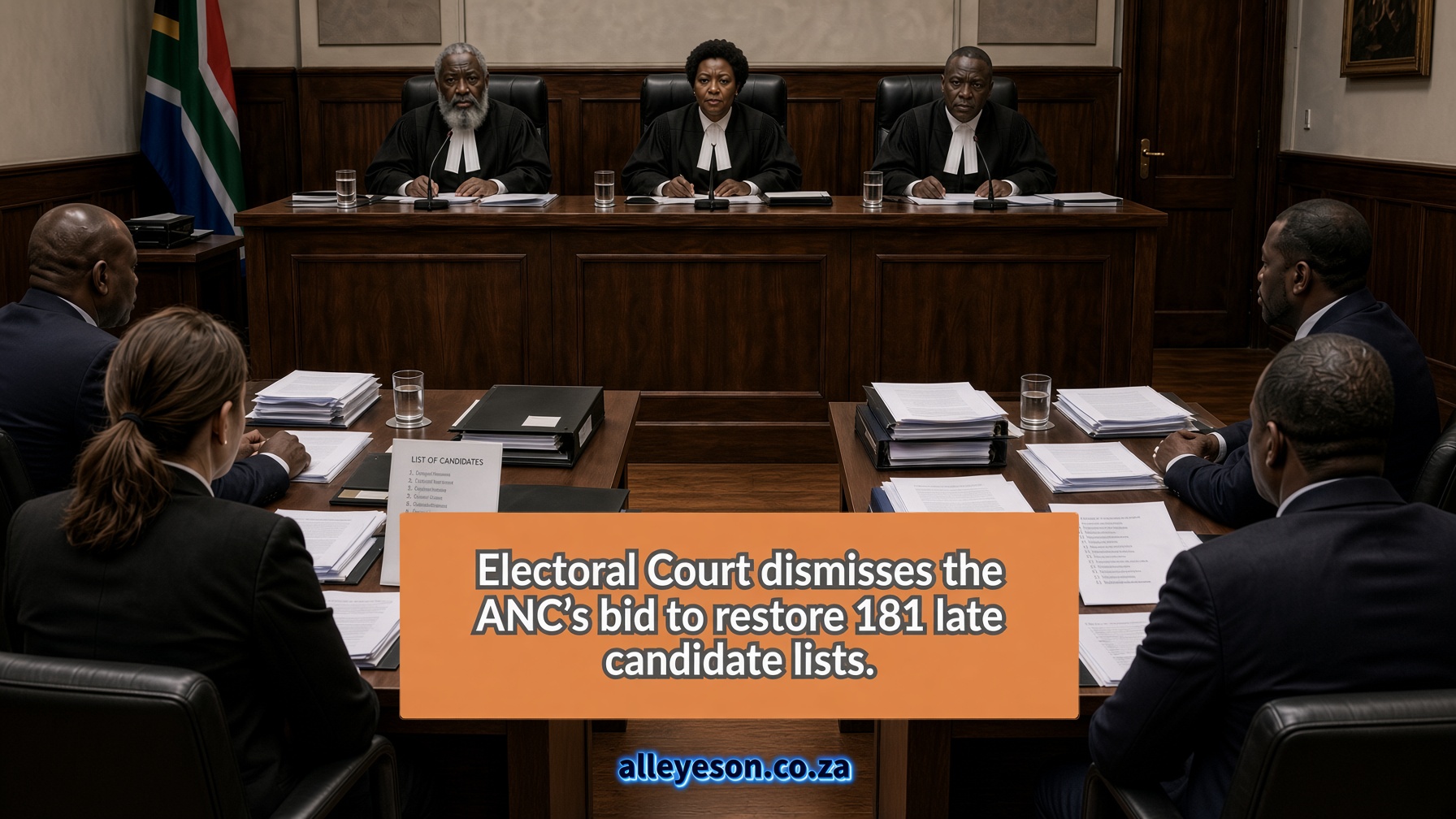
When the ANC went to court to force its way back onto the ballot in six municipalities, it expected a fight with the IEC. What it got instead was a second front — the Democratic Alliance, which walked into the Electoral Court on the ninth of September and asked to be heard against the very party it shares a governing coalition with in several of those same towns. The DA’s argument was simple and sharp. Deadlines are deadlines. It had submitted its candidate lists for all two hundred and fifty-seven municipalities before the twenty-eighth of August cut-off, and it said letting the ANC in after the fact would break the equal rules every other party had followed. Advocate Michael Bishop told the court the DA had a direct interest: it was contesting in all six affected municipalities, and free and fair elections need certainty about who is actually on the ballot. The ANC fought hard to keep them out. Fikile Mbalula said the DA had no quarrel with the IEC or the law, its real quarrel was with voters in those six places who might pick someone else. He pointed out that two thousand two hundred and seventy-four candidates from forty-five other parties were also affected by late submissions, so the DA was singling them out. The court still let the DA in. The African Transformation Movement tried the same move but was thrown out for being too late and without condonation. After the ruling, the DA called it a clean win for the rule of law and said the ANC’s case looked more like a PR exercise than a real legal fight.
The political context.
That last line stings, because it lands on a truth the ANC would rather not name. The party that spent years lecturing others about discipline and process could not press a button on its own nomination system, and now it is being told so by its coalition partner in open court. There is a deeper irony here. The ANC and the DA govern together in several of the municipalities where this dispute is playing out. They sit in the same council chambers, share the same mayoral committees, and now they are facing each other across a courtroom over who gets to stand for election. It is a strange kind of coalition — one that holds together in government but falls apart the moment the ballot is involved. The DA’s intervention also changed the texture of the case. Without it, the dispute was a technical argument between a party and an electoral body. With the DA in the room, it became a political statement: the rules apply to everyone, including the party that wrote many of them. The ANC’s response — that the DA was fighting voters, not the IEC revealed more than it intended. It suggested the ANC sees elections not as a contest under shared rules but as a claim on territory, and that anyone who defends the rules is an enemy of its voters


The immediate result.
That framing is dangerous for a party already losing ground. In the 2021 local elections the ANC dropped below fifty percent nationally for the first time. In 2024 it lost its parliamentary majority. The story it tells itself is that voters are being misled or bought. The story the DA is now telling, with the court’s backing, is that the ANC cannot even manage its own paperwork. Whether that story sticks depends on what happens next. The IEC is printing ballots and sticking to the fourth of November. The ANC says it will appeal further. But the DA has already won the narrative round: it entered the fight, it won the argument, and it left the ANC looking like a party that cannot take no for an answer from its own rules.


The long-term result.
The DA’s intervention will outlast this election cycle. Every time a voter in Port St Johns or Ngquza Hill looks at a ballot without an ANC name on it, they will remember who fought to keep it that way and who fought to change the rules after missing the deadline. The coalition between the ANC and the DA in those municipalities now carries a visible crack, one that opposition parties will exploit in 2026 and beyond. And the ANC’s internal factions will use this loss as ammunition: the party that could not press a button is the party that cannot be trusted with government. The DA has handed them a story they did not ask for, and stories like this tend to compound rather than fade.