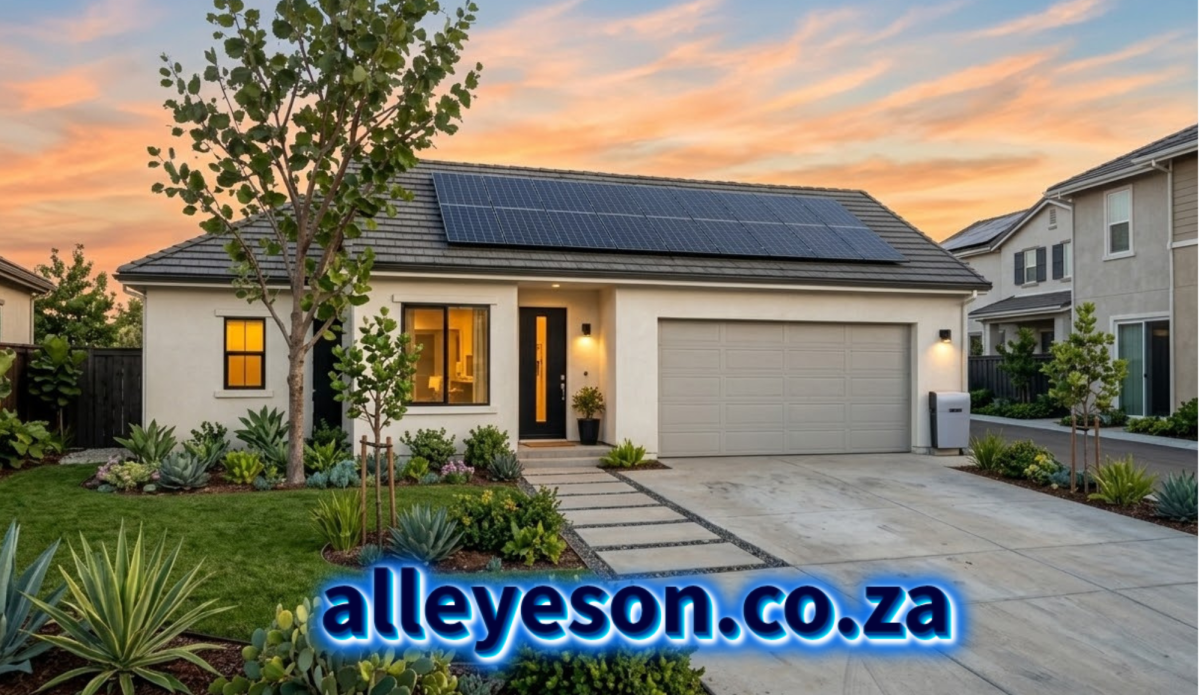

Nearly two-thirds of UK home movers now want their next property to generate most or all of its own energy. Rightmove’s 2026 Greener Homes Report found 63% prefer solar panels, home batteries and heat pumps. Only 8% still want full dependence on the grid.
The drivers are clear. Soaring energy prices and geopolitical risk, particularly the wars in Iran and Ukraine, have shifted buyer priorities. Fifty-three percent of movers said recent price rises increased their interest in solar and battery storage. Demand for homes with heat pumps has risen 83% and for solar panels 61% since earlier baselines. Listings mentioning heat pumps are up 151% and solar panels 94% since 2022.
Cooling also matters. Eighty-seven percent of movers ranked a home’s ability to stay cool as important, after record summer temperatures.

South Africa has already lived a sharper version of this shift. Load-shedding forced a private solar boom that official figures still struggle to capture fully. Eskom’s own estimates put behind-the-meter rooftop solar capacity at 9,430 megawatts by September 2026, almost equal to the combined peak of Medupi and Kusile. Total installed solar PV passed 10 GW, with the majority distributed rather than utility-scale.
Residential uptake is substantial. Stats SA recorded 675,000 households with solar panels by 2025, an 86% rise in three years, concentrated in Gauteng and the Western Cape. Industry analysts estimate tens of thousands more systems remain unregistered. Only 184 households had moved onto Eskom’s compulsory Homeflex tariff for registered small-scale systems by late 2026.

The growth pattern tracks the crisis. Additions peaked at 2.6 GW in 2023 during severe load-shedding, then slowed to 1.6 GW in 2025 as blackouts eased. High tariffs and the desire for independence now sustain the market more than outages alone.
The UK data and South African experience point to the same conclusion: energy security has moved from policy slogan to household priority. Buyers and owners are choosing systems that cut bills and reduce exposure to external shocks. In both countries the grid remains essential, yet private generation is rewriting the relationship between homes and the network that serves them.
For South African readers the numbers are not abstract. The rooftop capacity already installed is large enough to have helped end load-shedding. The same logic that now shapes UK property searches has been operating here for years, driven first by necessity, then by cost and control.