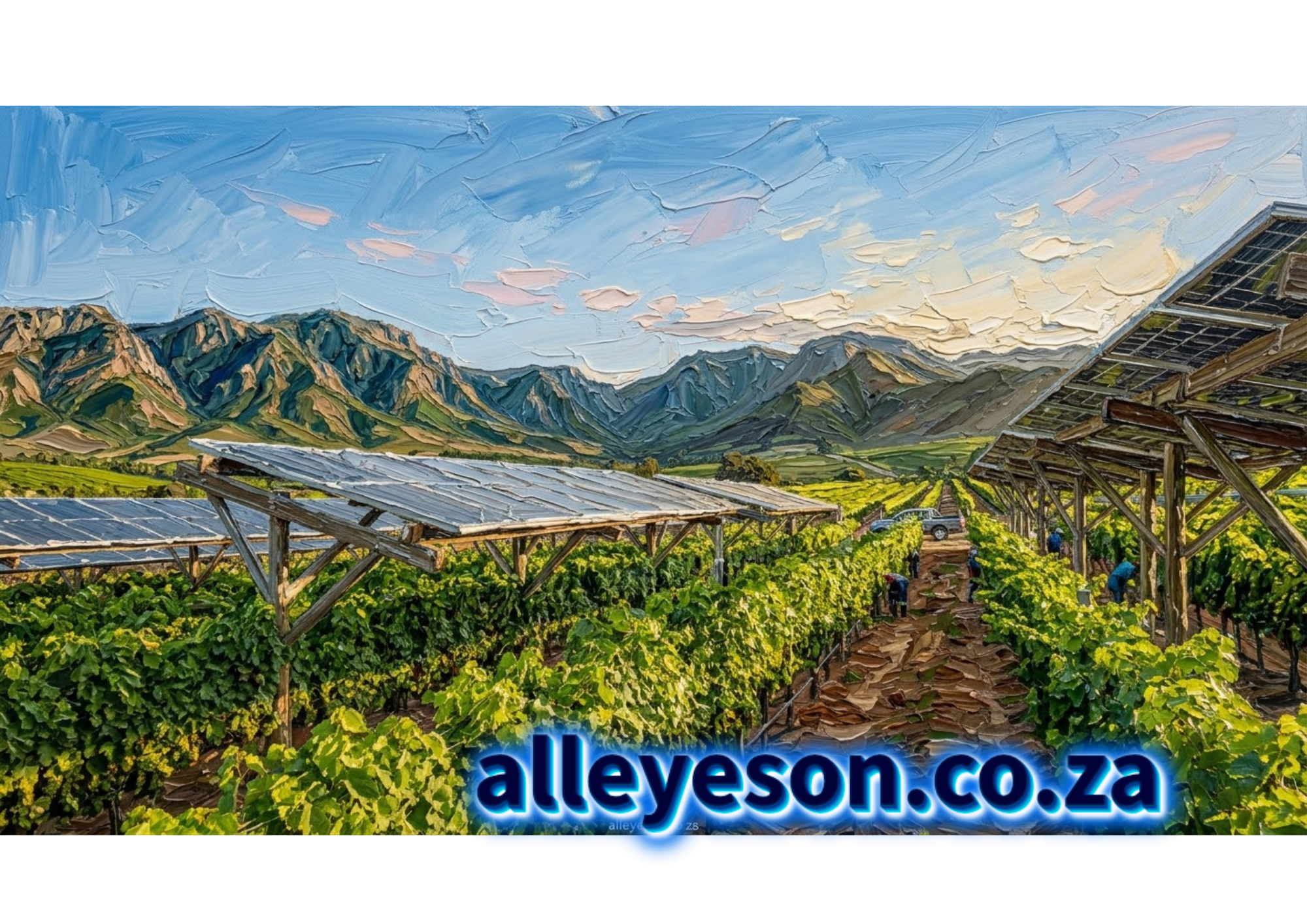

For grape growers in the Breede River Valley, summer heat management and energy independence have become twin priorities. Between intense heatwaves, shifting water availability, and structural grid challenges, wine estates across Rawsonville and Breedekloof have turned aggressively toward solar power. Local anchors like Du Toitskloof Cellar have set major regional benchmarks, operating an advanced 625 kW grid-tied solar system with smart generator integration to keep cooling systems running and limit diesel costs during load-shedding.
Across the wider Breedevallei, large cooperative cellars typically run installations ranging from 300 kW to 500 kW to handle high-volume crush and fermentation loads. To date, however, most solar infrastructure remains strictly roof-mounted or ground-arrayed alongside cellars and tasting rooms. A groundbreaking study from southern Italy suggests that moving panels directly above the vines, a concept known as agrivoltaics, might offer surprising agricultural benefits alongside clean energy generation.

The study, conducted by researchers at the University of Bari and published in Scientia Horticulturae, examined a 350 kW agrivoltaic installation at the Vigna Agrivoltaica di Comunità near Laterza in Puglia, down in the heel of Italy. The trial monitored dry-farmed Primitivo vines planted under overhead solar panel arrays. Under heavy shade, where light was reduced to approximately 5 percent of open conditions directly beneath the panels, the findings defied conventional expectations. Shaded vines produced grape bunches averaging 164.9 grams (5.8 oz) compared to just 65.4 grams (2.3 oz) in full sun. Furthermore, shaded shoots grew nearly nine feet long compared to four feet in full exposure, while sugar levels at harvest dropped from 25.8 °Brix in the open sun to a manageable 22.9 °Brix under cover, with total acidity remaining stable.

Lead researcher Professor Giuseppe Ferrara explained that the physiological driver behind these results comes down to severe heat stress mitigation. During extreme summer heat, vines in full exposure shut down their stomata to prevent moisture loss, effectively halting photosynthesis and entering survival mode. Under solar shade, reduced canopy heat stress allows stomata to remain open longer during peak afternoon hours, enabling continuous carbon assimilation and shoot growth. Notably, Ferrara cautioned that agrivoltaics is not a universal solution; in cooler, wetter wine regions such as Valpolicella in northern Italy, overhead panels reduced yields because vines lacked sufficient light without suffering heat stress.
The climate dynamics of Puglia share striking similarities with South Africa’s semi-arid inland grape growing districts. In the Rawsonville and Breedekloof valleys, where summer afternoon temperatures frequently surge and irrigation water allocation requires careful budgeting, heat stress regularly threatens yield stability and sugar balance. Further east along Route 62 toward Barrydale, where hot, dry conditions define the microclimate, regional operations and boutique cellars like Joubert-Tradauw have integrated commercial solar systems in the 100 kW range to navigate extreme heat and power demands. Overhead vineyard arrays could represent a logical next step for hot, dry sites facing severe sunburn and water constraints.

While these Italian results offer compelling data, local viticulturists emphasize that these single-season Italian trial numbers cannot be treated as a guaranteed template or explicit promise for South African vineyards. Ground-level trials under local soils, trellis systems, and cultivars would be necessary before claiming proven yield gains in Western Cape terroir. Nevertheless, as Western Cape winemakers search for sustainable ways to lower alcohol percentages while shielding crops from scorching sun, agrivoltaics presents an intriguing dual prospect: harvesting clean electricity above while keeping the vines cool below.