Picture this: it’s July 2026, and you’re meeting someone new at a church gathering, a business networking event in Cape Town, or a community braai on the West Coast. Instead of hesitating before handing over your phone number, you simply share a username like @Alleyeson.co.za, and connect safely on WhatsApp without exposing your personal digits.
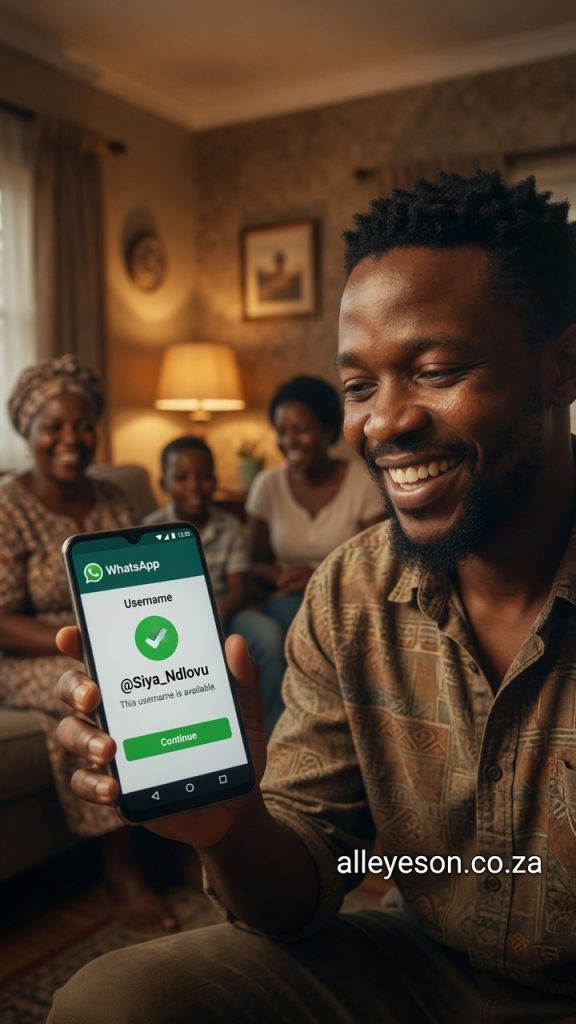
That convenience just became reality. Meta-owned WhatsApp has begun rolling out one of its most significant privacy upgrades yet: the ability for its three billion users worldwide to use unique usernames instead of phone numbers to connect with others. Users in South Africa and many other countries can now reserve their preferred handle ahead of the full feature launch later this year.
For millions of South Africans who rely on WhatsApp for everything from family chats and church group coordination to business dealings and community organising, this change feels like a breath of fresh air. No more unwanted calls or messages from strangers who somehow got your number. No more awkward moments deciding whether to share your digits with a new acquaintance.
According to WhatsApp’s official announcements and reports from sources like BBC and The South African, the feature works simply. Users go to Settings > Account > Username in the latest app version to reserve a handle (3 to 35 characters). Once the full rollout happens, you’ll be able to message new contacts or join groups by sharing only your @username — your actual phone number stays hidden.
The design prioritises privacy. There is no public directory or search suggestions, so someone must know your exact username to reach you. For extra protection, users can add an optional username key (a short code) that others must provide along with the handle. WhatsApp will also reserve certain high-profile usernames for celebrities, public figures, and organisations to prevent impersonation.
This update comes at a perfect time for South Africa. With high smartphone penetration and WhatsApp being the go-to communication tool for daily life, from coordinating deliveries to staying in touch with distant family, protecting personal information has never been more important. It reduces risks of spam, scams, and number harvesting that many users have experienced.
In July 2026, as South Africans navigate everything from economic pressures to staying connected with loved ones, small improvements like this matter. They remind us that technology can evolve to serve people better, protecting privacy while keeping us close to those who matter most.
Businesses and creators stand to benefit too. Companies can claim consistent usernames matching their Instagram or Facebook handles, making it easier for customers to reach them without sharing personal contact details. Small enterprises, church ministries, and community groups across the country will find this especially useful for building trust while maintaining boundaries.
Of course, you’ll still need a phone number to register and use WhatsApp itself. But once usernames are active, new conversations won’t automatically reveal that number. End-to-end encryption for chats remains firmly in place, giving users confidence that their conversations stay private.
As with any big change, the rollout is gradual. Not every South African user will see the username reservation option immediately, but WhatsApp will notify people in-app when it becomes available in their region. Early reservation is encouraged because with over three billion users, popular names will go quickly.
This move aligns WhatsApp more closely with apps like Signal and Telegram, which have offered username options for some time. For a platform that started as a simple messaging tool, it represents a thoughtful evolution toward better user control in an increasingly connected world.

The coming months will show how deeply this feature integrates into daily life. For now, it’s worth updating your app and reserving that perfect username before someone else does. In a country where WhatsApp feels almost as essential as airtime, this privacy boost is one change worth celebrating.


