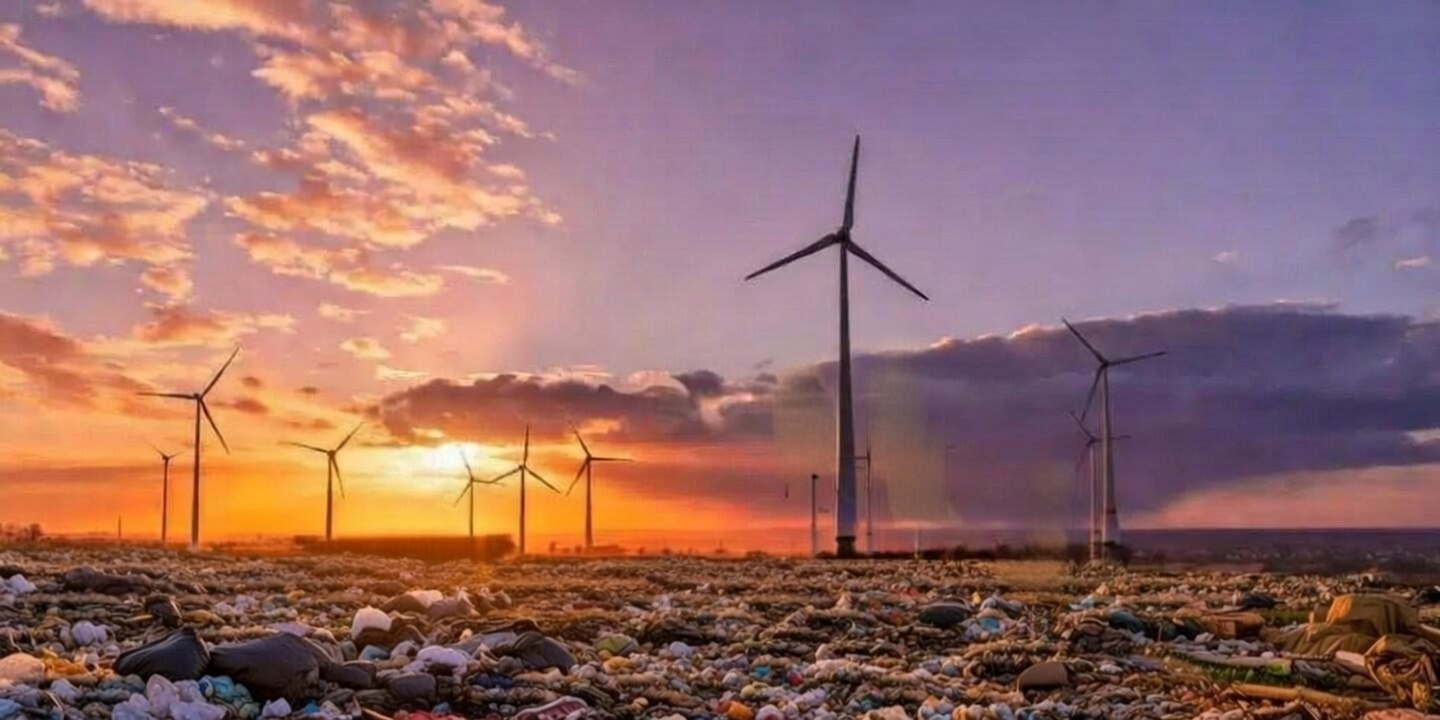

The rapid growth of wind energy has been a cornerstone of the global shift toward renewables, but it has carried a hidden environmental cost: massive, non-recyclable turbine blades. Traditional blades, often exceeding 100 meters in length for offshore turbines, are made from durable thermoset composites—typically epoxy resins reinforced with fiberglass or high-value carbon fiber. These materials provide exceptional strength and lightness but form irreversible chemical crosslinks, making end-of-life blades nearly impossible to recycle without energy-intensive processes like pyrolysis or mechanical grinding, which degrade fiber quality and yield only low-value fillers. As a result, millions of tons of blades have historically ended up in landfills or incinerated, undermining wind power's sustainability credentials.
In January 2026, China's MingYang Smart Energy changed the game with the launch of the MySE23X, the world's first fully recyclable carbon fiber wind turbine blade over 110 meters long. This breakthrough addresses the "dark side" of wind energy head-on, enabling a true circular economy for the industry's most challenging waste stream.
The Innovation: Mild Chemical Recycling
MingYang's proprietary process relies on a special degradation solution that operates at ambient temperature and normal pressure—a dramatic departure from conventional methods requiring extreme heat, pressure, or harsh chemicals. The solution selectively targets and degrades the resin matrix (the "glue" binding the composite), allowing clean separation of high-quality carbon fibers (retained for reuse in new blades or other high-performance applications), Resin derivatives (recycled into new materials), Core components (e.g., foam or balsa wood).
This mild, low-energy approach preserves fiber integrity far better than traditional solvolysis (which often uses high temperatures, supercritical fluids, or strong acids/bases) or mechanical/thermal alternatives.

Underlying Chemistry: Cleavable Bonds
The key enabler is cleavable bond chemistry incorporated into the resin. By designing the polymer network with labile linkages—such as esters, acetals, or dynamic covalent bonds—these resins can be selectively broken under controlled conditions without damaging the reinforcement fibers. MingYang's system appears to build on (or surpass) earlier technologies like Swancor's EzCiclo/CleaVER recyclable epoxies, extending full recyclability to carbon fiber composites, which are more valuable and harder to recover than fiberglass.
This contrasts sharply with competitors like Siemens Gamesa, whose RecyclableBlade uses acid-dissolvable resins primarily for fiberglass. MingYang's ambient-condition process represents a "quantum leap," minimizing energy use and environmental impact while maximizing material recovery.
Broader Impact and Industry Momentum
As offshore turbines push blade lengths beyond 120 meters, waste volumes are projected to explode in the coming decades. Fully recyclable designs like the MySE23X could prevent this crisis, reducing reliance on virgin materials and cutting lifecycle emissions. The technology also aligns with emerging advanced polymers—vitrimers, self-healing systems, and shape-memory materials—that promise even greater durability and adaptability in future generations of blades.
MingYang's achievement is not isolated; it reflects accelerating global efforts toward sustainable composites. With regulatory pressure mounting (e.g., EU targets for blade recyclability), similar innovations are expected from Vestas, GE, and others.
Wind energy is finally shedding its last major sustainability flaw. Fully recyclable blades ensure that the clean power revolution leaves no waste behind—only cleaner skies ahead.
Next article topic: Cleavable Bond Chemistry and Its Role in Sustainable Composites.