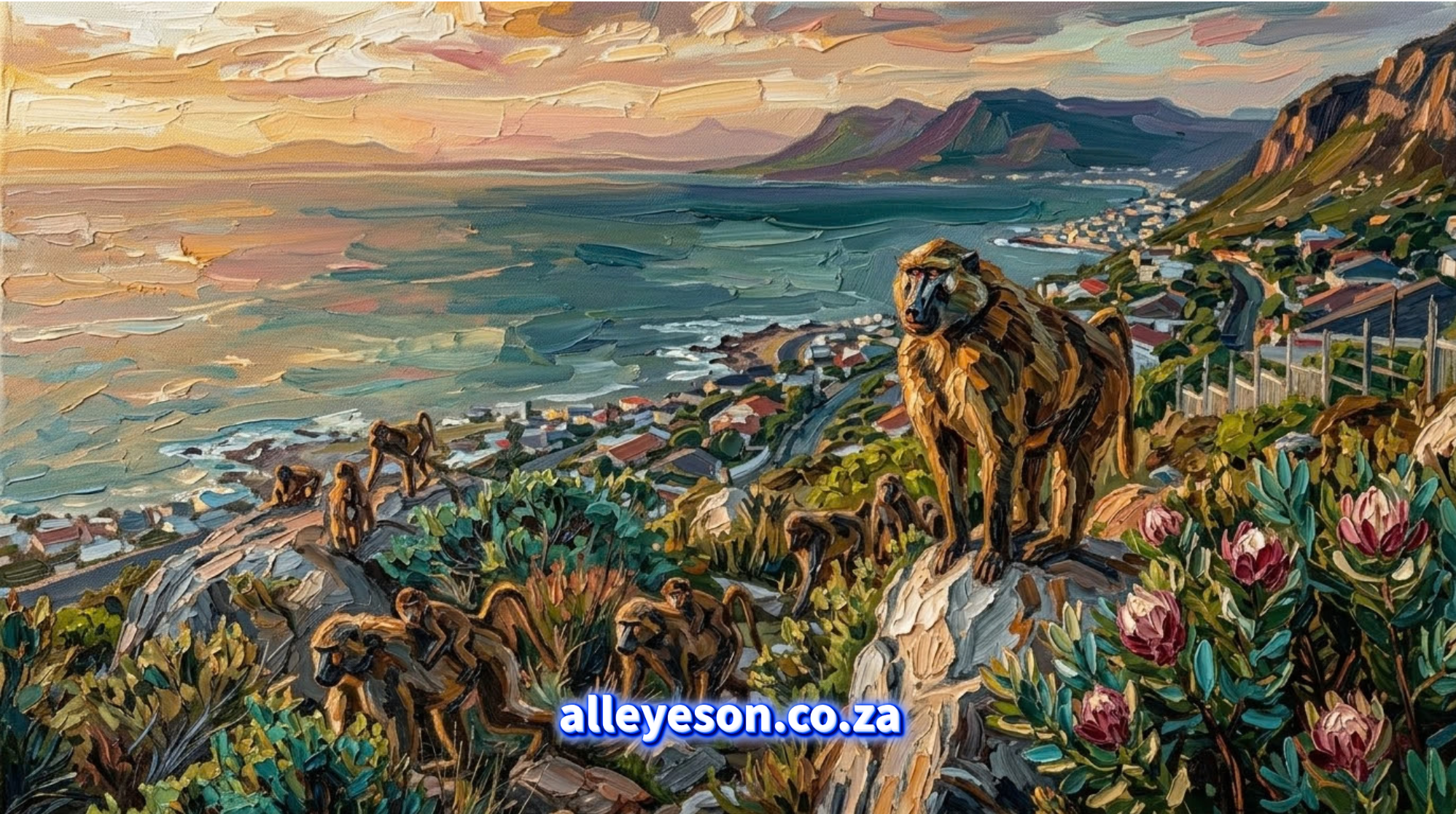

Cape Town baboon management debates On the steep slopes above Simon’s Town the last free-ranging Waterfall and Seaforth baboons still move at dawn, mothers carrying infants, big males scanning the rooftops. Within weeks those same animals may vanish behind high fences at Kogelfontein, never to return. The decision cuts deeper than policy.
For some residents the baboons are thieves and invaders that leave faeces on verandas and force families to live behind locked windows. For others they are neighbours whose intelligence and family bonds mirror our own, and whose permanent captivity feels like a quiet betrayal of the wild Cape.The City, CapeNature and SANParks have spent years trying every softer method. Rangers, paintballs, noise, baboon-proof bins, even electric fencing in places like Zwaanswyk. Yet the two troops kept returning, bold and hungry. Officials now say the only remaining choice is to trap roughly sixty animals, sterilise the males, and lock them away for life in a purpose-built enclosure. They speak of welfare, of animals hit by cars or stoned by angry residents, of property values collapsing under the daily siege.

The R33 million budget is presented as responsible spending to end an impossible conflict.But on the streets the language is rawer. Protesters carry stuffed toy baboons in makeshift cages and call the planned centre a “zoo of shame.” Long-time locals who once watched the troops move safely across the mountain now speak of heartbreak. “They have names. They have histories,” one activist said. “Putting them in a cage does not solve the problem we created by building into their home.” Green Group Simonstown walked out of the advisory process, refusing to lend legitimacy to what they see as defeat dressed up as management. Primatologists warn that breaking troops permanently destroys the very social intelligence that makes baboons so compelling and so difficult.The emotion runs both ways. Homeowners describe nights of broken sleep, children too frightened to play outside, the constant smell and the fear of a large male standing in a kitchen. Some say they can no longer sell their houses. Others refuse to accept that the only answer is to erase the animals from the landscape. The peninsula’s baboon population has nearly doubled since 2000; human houses have pushed higher into the fynbos. The collision was inevitable. What feels unbearable is the finality of the chosen solution.
As municipal elections approach, the baboons have become more than animals. They stand for every unresolved argument about whose Cape this is—the expanding city or the ancient mountain. Whether the Kogelfontein fences become a necessary mercy or a lasting monument to failure will be measured not only in budgets and protocols, but in the silence that follows when the last troop is gone.