Imagine standing on a windswept hill above Saldanha Bay, the Atlantic stretching endlessly before you. The water is deep, glassy blue, with Seagulls scavenging for their next meal. A gentle swell laps at the shore, while in the distance, massive ore carriers glide toward the horizon like steel giants. This is Saldanha Bay – South Africa’s largest and deepest natural harbour, a place where history, industry, and raw natural beauty have quietly shaped one another for centuries.
The story begins in 1503 when Portuguese navigator António de Saldanha first charted these waters while seeking a route around the Cape. He never intended to name a bay after himself, yet his name stuck. For the next 400 years, the bay remained a wild anchorage prized by sealers, whalers, and guano collectors. French, English, and Dutch ships fought over its riches, but fresh water was scarce, so no permanent settlement took root. It stayed a rugged outpost on the edge of the world.
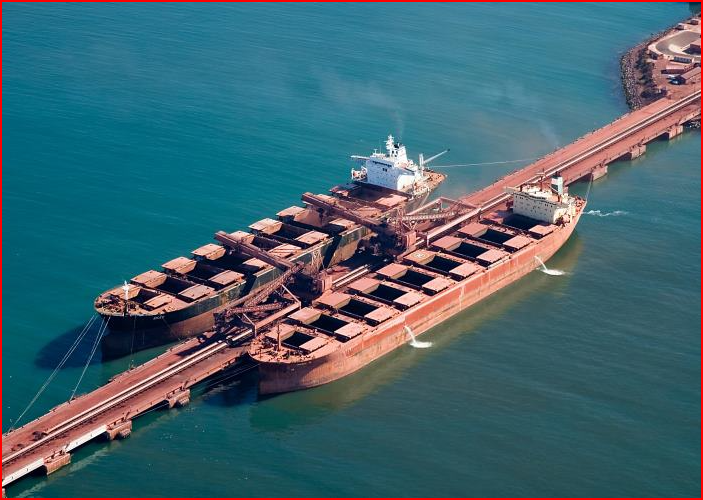
Everything changed in 1976. Engineers linked the iron-ore mines of the Northern Cape to the coast with the Sishen-Saldanha railway line. The new deep-water port opened with a single purpose: export South Africa’s high-grade iron ore to the world. Today, more than 1.1 billion tonnes have passed through these quays. The port boasts a 2.2-kilometre quay, six berths, and storage for millions of tonnes. It is the largest natural deep-water harbour in the Southern Hemisphere and remains one of the most efficient bulk-export facilities anywhere.
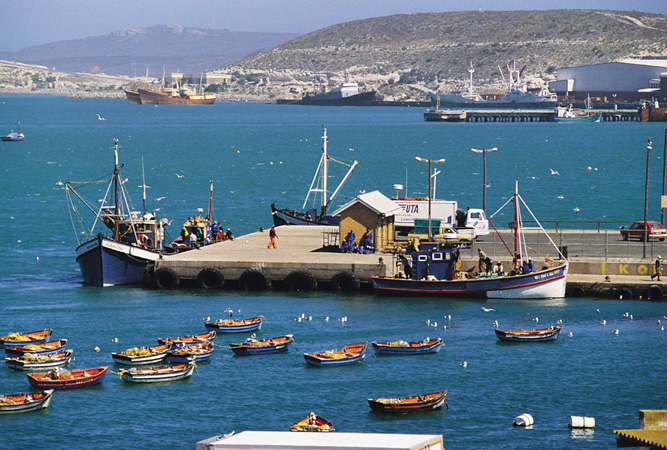
Yet Saldanha has never been only about iron. The cold, nutrient-rich upwelling currents make the bay a marine paradise. Local fishers have worked these waters for generations, but the real boom came with rope-grown mussel farming. Suspended on longlines just offshore, millions of mussels filter the pristine water and grow fat in record time. Saldanha’s mussels are now world-renowned, sustainably harvested, and a major employer. Oysters and other seafood follow the same clean, low-impact model. Together, fishing and aquaculture remain the heartbeat of the town.
In recent years, Saldanha has quietly reinvented itself again. The Freeport Saldanha Industrial Development Zone (IDZ) sits right beside the port, the first special economic zone in South Africa built inside an active harbour. It draws investment in oil-and-gas servicing, ship repair, marine fabrication, and green-energy projects. The goal is clear: create jobs, diversify the economy, and keep the bay working for its people without sacrificing its natural gifts.
Visitors discover another side. Kite-surfers race across the bay on steady south-easterlies. Families picnic along the Langebaan Lagoon, part of the West Coast National Park. Birdwatchers scan the shallows for flamingos and pelicans. On clear days, Table Mountain floats on the southern horizon like a distant dream. The town itself is small and friendly – a handful of shops, a church almost on the beach, and seafood restaurants that serve the day’s catch straight from the boats.
Saldanha Bay has never chased fame. It simply adapted – from Portuguese waypoint to iron-ore lifeline, from fishing village to mussel powerhouse and energy hub. Through it all, the bay itself remains the same: deep, calm, and generous. It is proof that a single stretch of coastline can feed a nation, power an economy, and still leave room for quiet wonder. For those who live here and those who visit, Saldanha is more than a place on the map. It is a living story of resilience written in salt spray and steel.