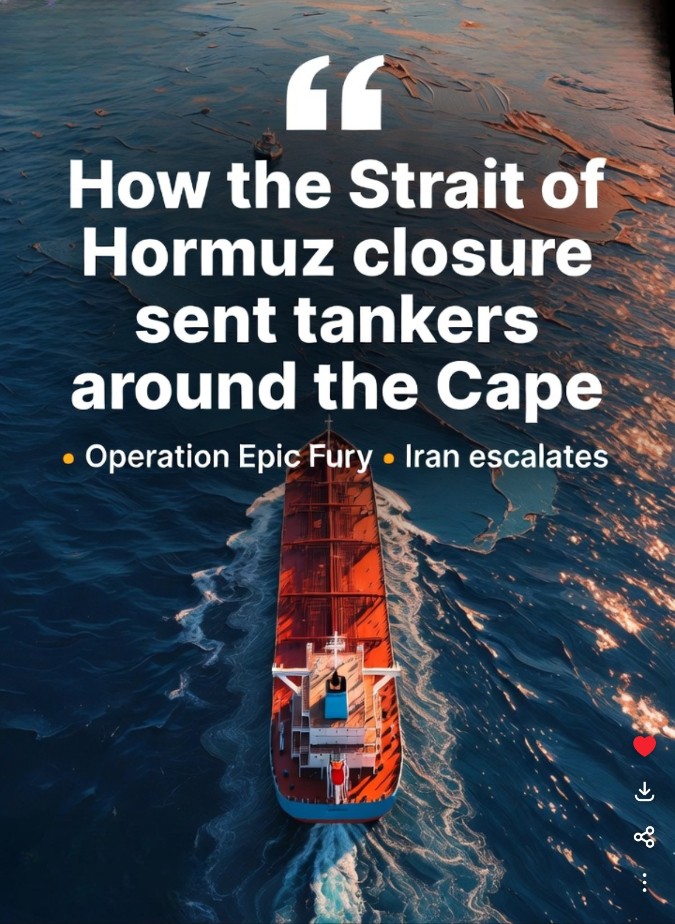
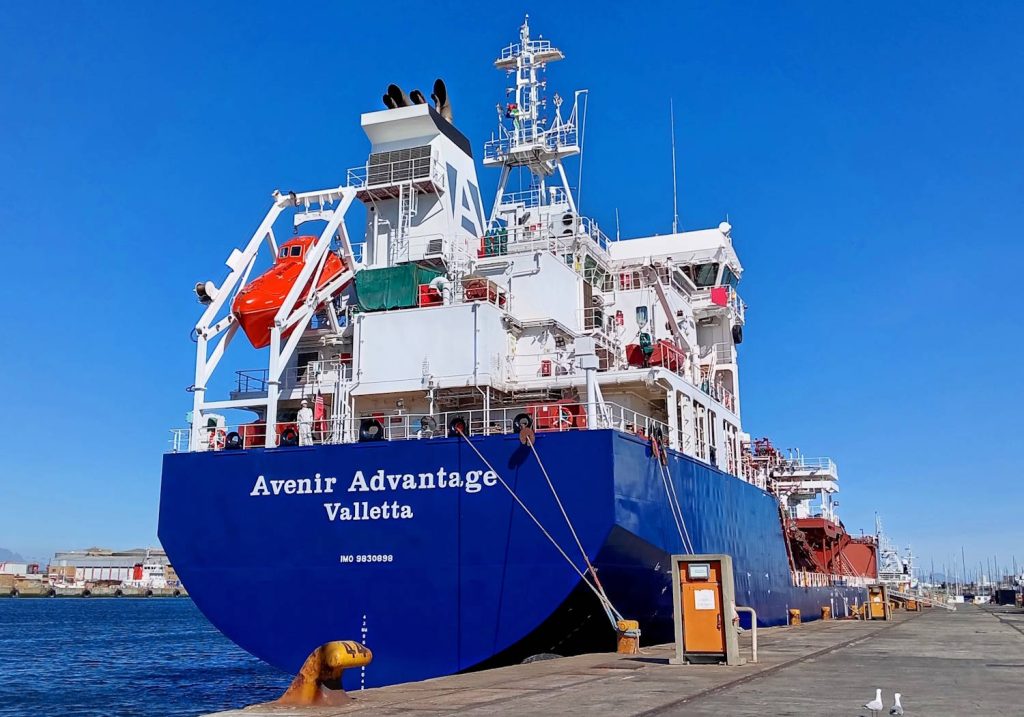
Picture this: A quiet morning in Saldanha Bay on South Africa’s West Coast, where residents have grown used to seeing the occasional large ship on the horizon. But in recent weeks, the view has changed. More giant tankers than usual are anchoring, refuelling, or slowly moving through the bay — vessels that would normally be thousands of kilometres away in the Middle East.
This unexpected traffic surge traces back to a single narrow stretch of water halfway around the world: the Strait of Hormuz. What began as a distant military escalation in late February 2026 has disrupted global energy routes and quietly redirected massive ships toward our shores.
Why the Strait of Hormuz Matters to the World — and to South Africa
The Strait of Hormuz is a slim waterway, only about 33 kilometres wide at its narrowest point, squeezed between Iran and Oman. It serves as the sole sea exit from the Persian Gulf, the region that produces much of the world’s oil.
Every day under normal conditions, roughly 20% of global oil supplies and large volumes of liquefied natural gas (LNG) flow through this chokepoint. Supertankers loaded in ports across Saudi Arabia, the UAE, Iraq, Kuwait, and Iran would steam out through the strait on their way to refineries and markets in Asia, Europe, and beyond.
For ordinary South Africans, this matters because disruptions here quickly affect fuel prices at local pumps. When the flow of oil slows, the cost of transporting and refining it rises — and that eventually reaches households and businesses across the country.
The Spark That Shut Down the Strait
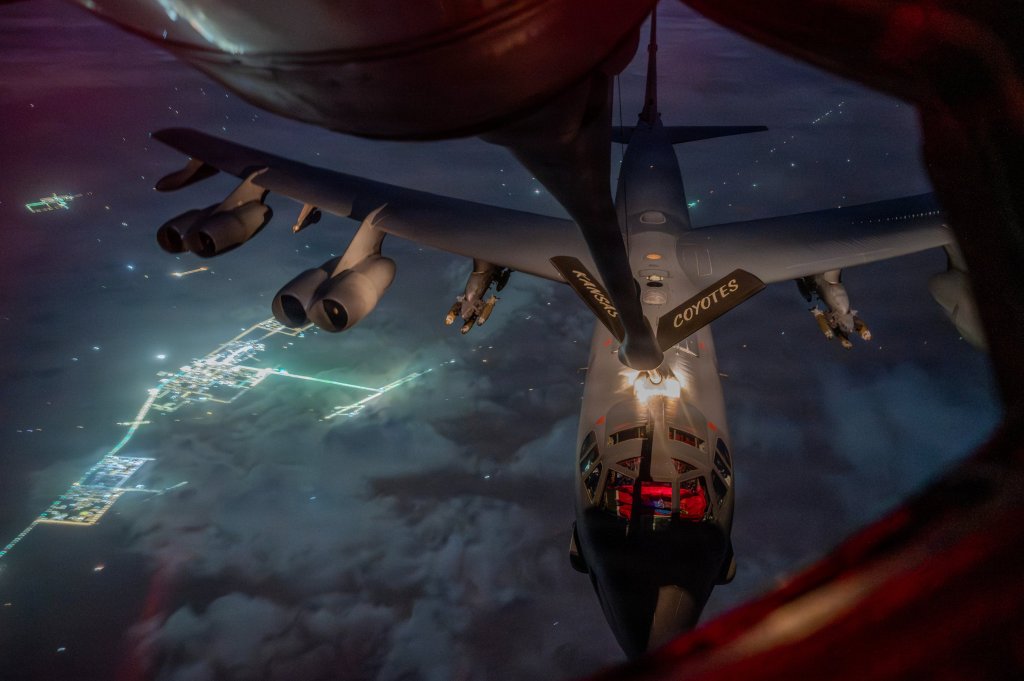
On 28 February 2026, the United States and Israel launched Operation Epic Fury, a series of coordinated strikes on Iranian military sites, nuclear facilities, and leadership targets. The operation marked a sharp escalation in long-standing regional tensions.
Iran responded forcefully. Its forces issued strong warnings to commercial vessels and carried out attacks on ships in and around the strait. Within days, the Islamic Revolutionary Guard Corps effectively made the waterway too dangerous for most international shipping.
The impact was swift and dramatic. Normal daily transits through the strait — typically 100 to 140 vessels — plummeted. In the first weeks of March, traffic dropped by 80–95%, with some days seeing only a handful of crossings or near-zero commercial activity. Hundreds of tankers and cargo ships ended up anchored or loitering outside the strait, their crews and owners unwilling to risk missiles, drones, or other threats.
Shipping Giants Make a Difficult Choice
Faced with this sudden closure, the world’s major shipping companies had to act fast to protect their crews, vessels, and cargo. Companies like Maersk, Hapag-Lloyd, and CMA CGM suspended all transits through the Strait of Hormuz and the connected Red Sea routes almost immediately. Insurance providers withdrew war-risk coverage, making any passage through the area extremely expensive — and potentially impossible.
With the usual short route via the Suez Canal now off-limits, these shipping lines faced a stark decision: wait for the situation to improve or take the much longer, safer detour around the Cape of Good Hope at the southern tip of Africa.
The Cape route adds 10 to 20 extra days at sea and thousands of additional nautical miles. Fuel costs climb, delivery schedules fall behind, and crews endure longer voyages far from home. Yet for the companies involved, it became the only practical way to keep global trade moving while avoiding the high-risk waters of the Middle East.
From a Distant Conflict to Visible Changes in Saldanha Bay
As hundreds of rerouted vessels began streaming south along Africa’s western coastline, South African waters saw a noticeable uptick in traffic. Ports and bays along the route, including Saldanha Bay with its deep, sheltered waters and established infrastructure for large tankers, suddenly became practical stopping points.
Ships call in for bunkering (refuelling), fresh provisions, crew changes, or minor repairs after the extended journey. What started as a geopolitical crisis in the Persian Gulf has quietly turned parts of South Africa’s West Coast into a strategic support hub for this new global shipping pattern.
Timeline of Escalation (Late February – Early April 2026)
28 February: US and Israeli strikes begin under Operation Epic Fury.
Early March: Iran responds with attacks on vessels; commercial traffic through the Strait of Hormuz drops sharply (80–95% decline).
1–5 March: Maersk, Hapag-Lloyd, CMA CGM and others suspend transits and begin rerouting vessels around the Cape of Good Hope.
Mid-March onwards: Surge in shipping traffic around southern Africa; African bunkering ports, including those in South Africa, see increased activity.
April 2026: The situation remains tense, with ongoing diplomatic efforts and uncertainty about when — or if — the strait will fully reopen.
In the next article, we’ll dive deeper into The Cape Route Boom — exploring the day-to-day logistics of these longer voyages, the rising costs involved, and how this major shift is reshaping global trade patterns in real time.


