

Every summer the fruit leaves the valleys of the Western Cape and begins its long journey north. Apples, pears, grapes and stone fruit move by truck and train toward the Port of Cape Town, where they must board ships quickly if they are to reach European and other markets in peak condition. For years that final stretch has been the weak link. Delays, equipment failures and the Cape’s notorious winds have cost exporters money and reputation. This season Transnet and the Department of Transport are trying to change the story.
Transport Minister Barbara Creecy recently reported clear operational gains at the Cape Town Container Terminal. Average truck turnaround time has improved to 39.9 minutes, a 35 percent year-to-date improvement. Rail performance is up 82 percent. Vessel waiting time has fallen from 115 hours to 44.3 hours. Ship turnaround time inside the terminal has dropped from 103 hours in 2023/24 to 55 hours so far this financial year. These are not small numbers. For fruit that lives or dies by the cold chain, hours matter.
The gains rest on hard investment. All 28 new rubber-tyred gantry cranes at the terminal are now working. Four additional straddle carriers delivered in June have passed endurance testing and entered service. Ten permanently deployed shore tension units have cut long-wave-related downtime by 92 percent since 2023/24. Reefer plug-point capacity is being closely managed so that export cargo can remain properly chilled while it waits for a berth.
Cape Town still handles roughly 80 percent of South Africa’s deciduous fruit exports. That concentration makes the port’s performance critical not only for Western Cape growers but for the national agricultural economy. When ships wait too long or the cold chain breaks, the loss is measured in millions of rands and in market share that is hard to win back.
Wind remains the persistent threat. Extended windbound periods have repeatedly closed the terminal in previous seasons. Transnet is building recovery measures into its planning: reviewing vessel and berth schedules, adjusting reefer stack dates where possible, and aligning cargo deliveries with realistic operating windows. Additional crews from Durban and Gqeberha are expected to reinforce Cape Town during the peak months. Leave is being managed so that more staff are available when the wind drops, even if that means working through the night.
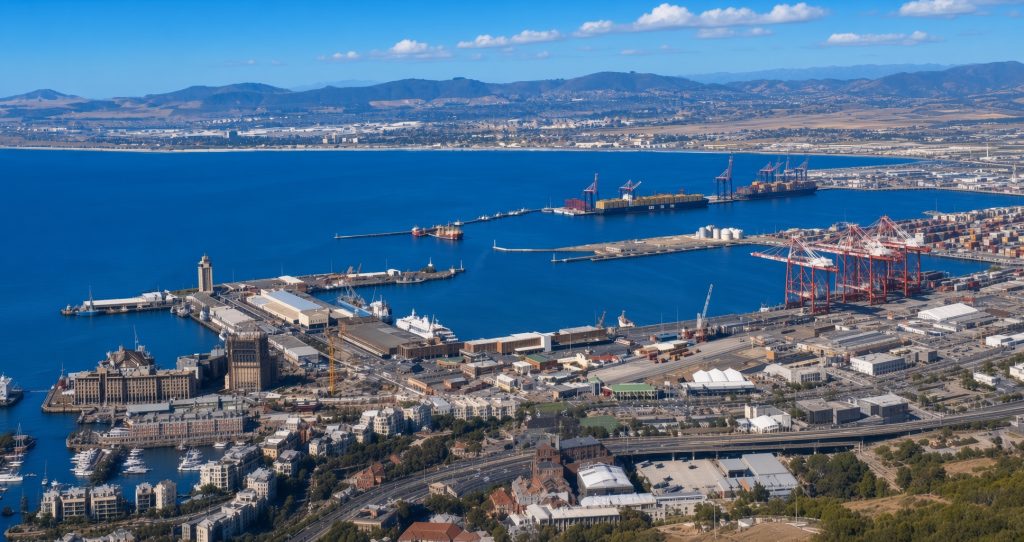
A new coordination structure is also taking shape. Stakeholders have agreed to establish a “war room” that will bring Transnet, shipping lines and cargo agents into closer, real-time alignment on gate, stack and vessel operations. The first formal sessions are expected by the end of September. Industry bodies, including the Citrus Growers Association, have welcomed the move as a practical step toward shared responsibility.
For West Coast communities the port’s reliability is more than an abstract logistics issue. Many of the trucks that queue the N7 and the coastal roads carry fruit grown in the valleys that feed into the wider Western Cape economy. Smooth flow at the harbour supports jobs in packing houses, transport and related services. Congestion and delay ripple outward.
None of the recent improvements guarantee a perfect season. Cape Town’s ranking among the world’s poorest-performing container ports earlier this year was a sharp reminder of how far the terminal still has to travel. Yet the combination of new equipment, tighter operational numbers and deliberate planning for wind and recovery shows a more serious attempt to protect the fruit export window than in recent years. Growers, exporters and the communities that depend on them will be watching closely as the first containers of the new season begin to move.