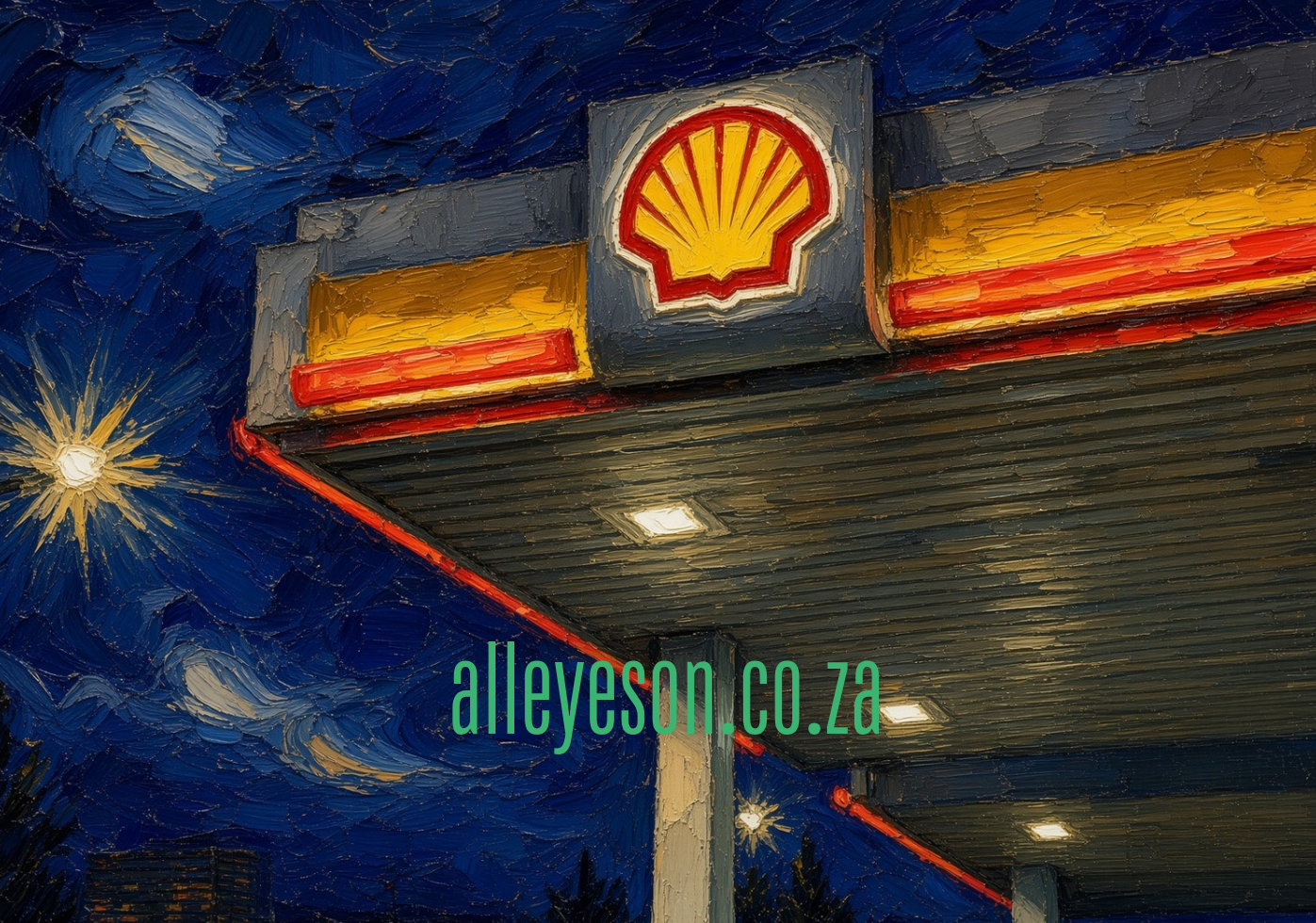

On the West Coast the yellow shell is part of the landscape. You see it on the way into Vredenburg. You see it when a tanker truck comes off the Saldanha road. You see it after a long run down the R27, when the tank light is already thinking about home. This week that sign did not change. The name on the pump did not change. The company that will own the network behind it did.
On 21 August 2026, ADNOC Distribution, the listed retail arm of Abu Dhabi’s state energy group, said it had signed a definitive agreement with South Africa’s Reatile Group. Once ADNOC completes its purchase of Shell Downstream South Africa from Shell, Reatile will take a minority stake in that business. The big sale itself was announced in July: an implied enterprise value of about one billion US dollars, roughly sixteen billion rand, for a network of around five hundred and eighty to six hundred company- and dealer-owned stations, plus wholesale fuel, aviation and lubricants. Completion is still aimed at 2027, and still subject to the usual regulators.
That is the honest shape of the headline. A new owner is lining up to take over close to six hundred petrol stations. The pumps stay Shell. ADNOC has already said it will keep the brand under a long-term licence. For the driver who only wants a litre of 95 and a pie, Friday’s news is quieter than the number suggests.
The quieter part is also the South African part. When the July deal was announced, ADNOC said that after closing it would sell about twenty-eight percent of the business to a local empowerment partner and an employee share plan. Friday named that partner. Reatile is a Johannesburg-based investment holding company with more than two decades in energy. Its founder and chair, Simphiwe Mehlomakulu, called the agreement a milestone in a twenty-three-year record of investing in and operating energy businesses in this country. ADNOC Distribution’s chief executive, Bader Saeed Al Lamki, framed it as the local step the group had promised.
South Africa’s forecourt map has already been rewritten once this decade. Vitol-backed Vivo Energy took control of Engen, the largest retail network, with more than a thousand sites. Glencore sits behind Astron Energy, the old Caltex chain of some eight hundred and fifty stations, and still owns the Milnerton refinery that can process about a hundred thousand barrels a day. Shell’s slice is smaller, about a tenth of the national market, but it is not small. The country has roughly four thousand six hundred service stations. Together they move tens of billions of litres a year. Shell’s downstream business last year moved about three and a half billion of those litres.
From this coast the story has a harbour face. Crude and product still move through Saldanha. Tankers still sit in the bay. A change of owner in Sandton does not fill a tank in Velddrif, but it does decide who books the cargo, who signs the aviation contract, and who pays the dealer. Jobs at the site, hours at the shop, the contract with the bakkie that hauls fuel inland, those are the questions that will matter after 2027, not the colour of a logo that is staying yellow.
Nothing in Friday’s statement says the deal is done. Competition authorities, licensing and the rest of the closing conditions still sit in front of both the ADNOC purchase and the Reatile stake. Until those clear, Shell remains the seller and the operator. That is worth saying plainly, because a sixteen-billion-rand headline travels faster than a gazette.
What has already changed is the pattern. The old international majors have been selling the shopfront. Traders and national oil companies have been buying it. Engen went to a trading house. Caltex became Astron under Glencore. Shell’s South African downstream now points toward Abu Dhabi, with a South African minority sitting in the register. The pump price will still be set in the regulated formula. The shop will still sell bread and airtime. The name on the pole will still say Shell.
On the West Coast that is enough for one weekend, and not enough for the years after. Watch the 2027 close. Watch who holds the twenty-eight percent in practice. Watch whether the dealer on the Vredenburg road still has the same supply contract when the new books open. The sign can stay. Ownership is what moves.